Research, teaching and technology applied to public problems.
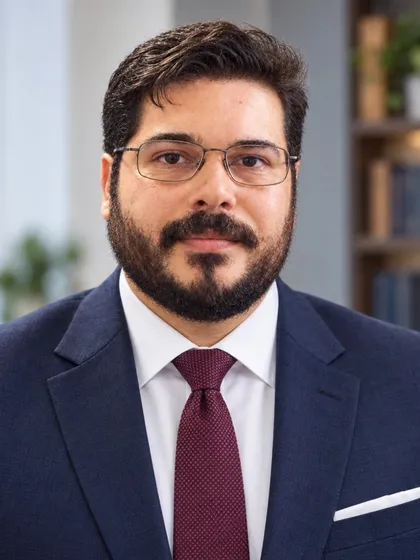
Valber Gregory Barbosa Costa Bezerra Santos
Professor at the Federal University of Alagoas, economist and researcher in information systems, applied data science and digital transformation.
I work at the interface between Economics, Law, Information Systems and Public Administration, developing empirical research and applied projects based on public data.
Public spending, education, agricultural prices and policy evaluation, cutting across Industrial and Organisational Economics — location and agglomeration of activities, firm structure and the design of public organisations.
AI adoption in the public sector, productivity, governance and security controls; and the theme of Artificial Intelligence, Legality and Legal Decision-Making — under which conditions AI systems can support legitimate, auditable and human-supervised legal decisions.
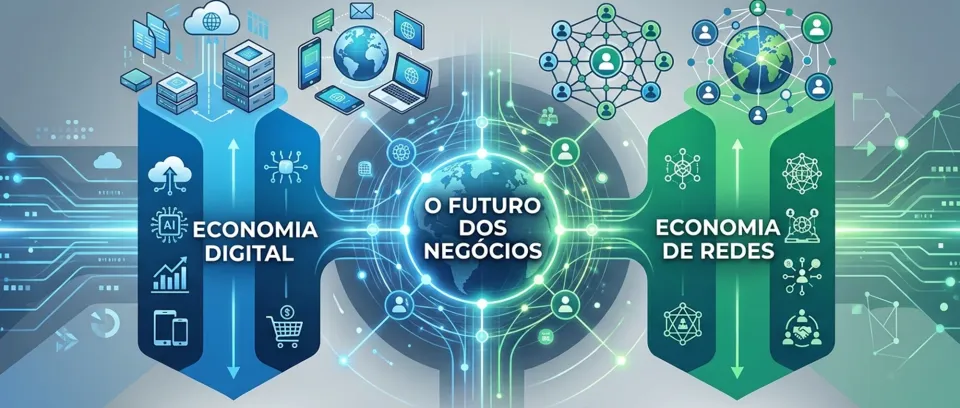
Instant payments (Pix), platforms and digital services, data and data protection, cybersecurity and regulation — the economics of digital markets and the law that organises them.
Are the state courts adopting AI at the same pace at which they develop security, governance, data-protection and incident-response controls?
Methodology: Comparative document analysis across six dimensions: data governance; information-security policy; data-protection officer; impact assessment; incident response; AI regulation; Weighted readiness matrix with four maturity levels (Initial, Basic, Intermediate, Advanced)…
Which factors explain the value of moral damages awards and how much do decisions vary across similar cases?
Methodology: Text mining and rule-based value extraction, with blind human validation; Quantile regression by type of harm and stratum (civil and small-claims appellate panels) and multilevel model for the share of variance attributable to rapporteur and panel…
Did the Porto Sem Papel programme reduce port times and trade costs? What informational transformation did digitalisation produce?
Methodology: Staggered difference-in-differences and event studies (Sun–Abraham) at the vessel-call level; Few-cluster inference (wild cluster bootstrap and date permutation)…
How do marine heatwaves affect the intensity and spatial distribution of fishing effort along the Brazilian coast?
Methodology: Cell-month geospatial data cube (H3 grid, Parquet, targets pipeline); Marine heatwaves under the Hobday et al. (2016) definition, with alternative definitions as robustness checks…
Do seasonal bans and marine protected areas reduce fishing pressure or displace effort to neighbouring areas?
Methodology: Spatial difference-in-differences, event study and placebo tests; Synthetic difference-in-differences and PPML as alternative specifications…
What is the role of distance, air connectivity and price competitiveness in international tourism demand for Brazil?
Methodology: Gravity models estimated by PPML with origin and month fixed effects; Correlated-random-effects specifications (PPML-CRE) for distance, contiguity, language and colonial link…
I teach at UFAL Penedo in the Information Systems programme and also in Tourism and Fisheries Engineering. The classroom is where concepts turn into concrete questions: Fisheries Economics opened a permanent research front, Tourism strengthened the interest in territorial development, and the subjects connecting Law, Economics and technology drive the jurimetrics and digital-government projects.
I welcome academic collaboration, interdisciplinary projects and institutional partnerships that use public data to answer concrete questions.
I write weekly on LinkedIn about these areas — applied economics, jurimetrics, AI in the public sector, tourism, ports and fisheries — in short pieces for non-specialists. Follow on LinkedIn(opens in a new tab)