Thematic series

Maritime Economics and Fisheries Economics

The sea as economic infrastructure for ports, routes, fisheries, the blue economy and information systems.

Published on · Valber Gregory· 10 publications

  • Maritime Economics
  • Fisheries Economics
  • Blue Economy
  • Bioeconomics
  • Small-Scale Fisheries
  • Ports
  • Logistics
  • Sustainability
  • Information Systems
  • Territorial Development
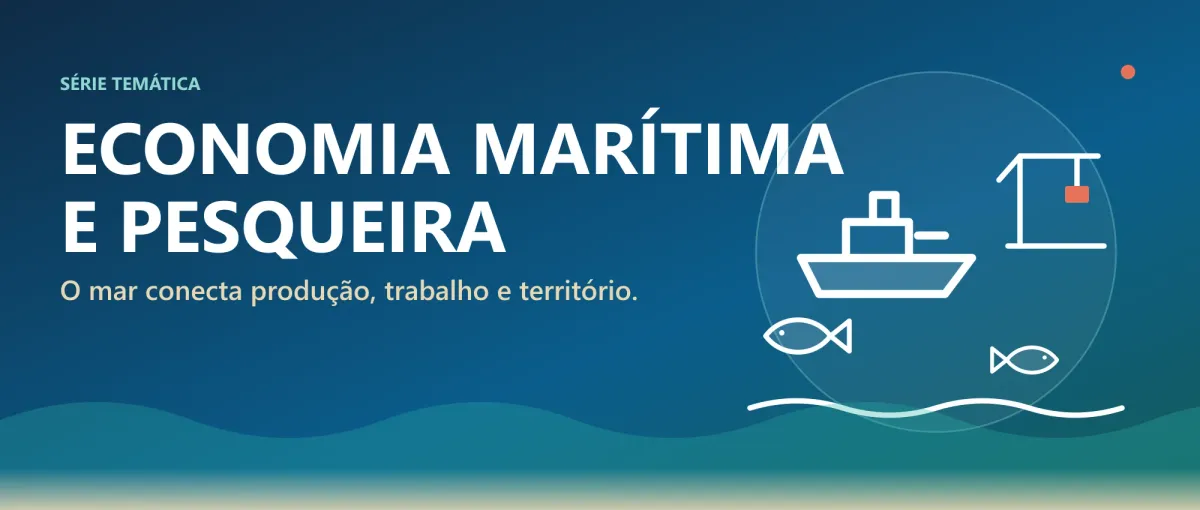
Series banner "Maritime and fisheries economics — the sea connects production, work and territory", with a ship, a port crane, fish and waves in ocean-blue and turquoise tones.

About the series

The sea is a piece of economic infrastructure that connects production, trade, food, energy, logistics, communities and territorial development. Maritime economics examines the activities associated with the oceans, transport, ports, logistics chains, natural resources and coastal territories. Fisheries economics concentrates on the use of fishery resources, the behaviour of agents, the costs of the activity, the formation of income, the conservation of stocks and the instruments of management and regulation.

My interest in these subjects took shape during the first semester of 2026, when I had the opportunity to teach Fisheries Economics to a class in the Fisheries Engineering programme at the Federal University of Alagoas. Despite health setbacks during the semester, we completed the planned work satisfactorily. Living alongside the students and getting closer to researchers and to the concrete problems of fishing broadened my learning and awakened a lasting identification with the field.

From that experience I gradually began to develop research, teaching materials, scientific articles and applied-project proposals related to maritime and fisheries economics. The publications are in dialogue with ongoing studies on marine heatwaves and fishing effort, the effects of closed seasons and marine protected areas, and the performance of Brazilian ports. As they are completed, course materials and applied products aimed at the fishing communities of Alagoas and the lower São Francisco will also be added to the site.

Thus, the series starts from the conviction that sea-related development depends on the articulation between scientific knowledge, economic efficiency, environmental protection and community participation. Studying these relationships is indispensable for turning maritime and fisheries potential into lasting income, food security and territorial development.
Publications in the series

  1. Part 1

    Maritime and Fisheries Economics

    The sea connects production, work and territory.

    Maritime economics and fisheries economics study activities that use the sea and its resources as a productive, logistical and social base: transport, ports, fishing, processing, energy, trade, science, monitoring and traditional communities.

    Read the full piece 2 min read

    • Maritime Economics
    • Fisheries Economics
    • Territorial Development
    • Sustainability
  2. Part 2

    Maritime economics

    Well beyond ships.

    Maritime economics covers, beyond transport, port infrastructure, shipbuilding, logistics, fishing and aquaculture, offshore energy, technology and coastal services: activities that affect jobs, prices, exports, food security and regional development.

    Read the full piece 2 min read

    • Maritime Economics
    • Ports
    • Logistics
    • Energy
  3. Part 3

    Shipping routes

    The sea organises global supply chains.

    Most international trade depends on shipping. Distances, port capacity, fuel, voyage time, insurance and bottlenecks shape the final price of goods, and a disruption at a strategic passage affects supply chains in many countries.

    Read the full piece 2 min read

    • Maritime Economics
    • International Trade
    • Logistics
    • Global Supply Chains
  4. Part 4

    Ports and development

    Infrastructure that connects territories.

    An efficient port cuts costs, eases exports, attracts investment and stimulates logistics and industry. But its impact on the territory depends on integration with roads, railways, information systems, urban planning and environmental policy, and on the externalities it creates.

    Read the full piece 2 min read

    • Ports
    • Maritime Economics
    • Logistics
    • Territorial Development
  5. Part 5

    Blue economy

    Growing without degrading.

    The blue economy seeks to reconcile sea-related economic activity with environmental conservation and community well-being. The value produced by the oceans depends on healthy ecosystems; sustainability is a condition for continued income, not a separate goal.

    Read the full piece 2 min read

    • Blue Economy
    • Sustainability
    • Maritime Economics
    • Fisheries Economics
  6. Part 6

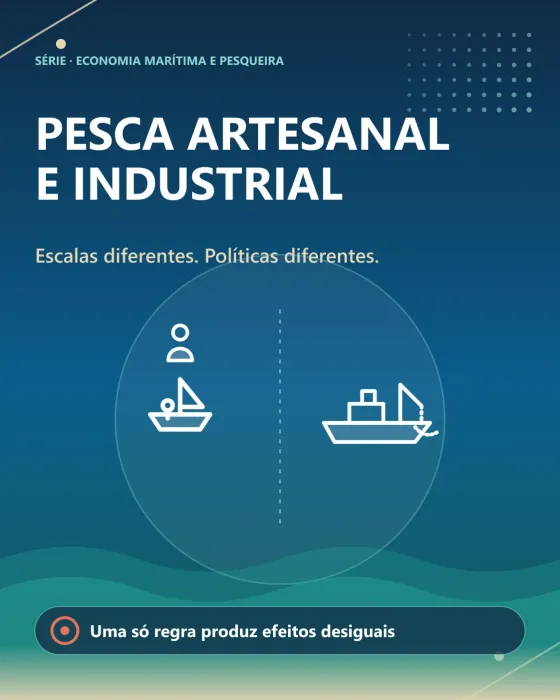
    Small-scale and industrial fishing

    Different scales. Different policies.

    Small-scale fishing is more tied to the territory, uses smaller boats and weighs on local income and food security; industrial fishing operates at larger scale, with more capital, technology and logistics. Differences in scale, cost and impact call for specific policies: a single rule produces unequal effects.

    Read the full piece 2 min read

    • Fisheries Economics
    • Small-Scale Fisheries
    • Industrial Fishing
    • Public Policy
  7. Part 7

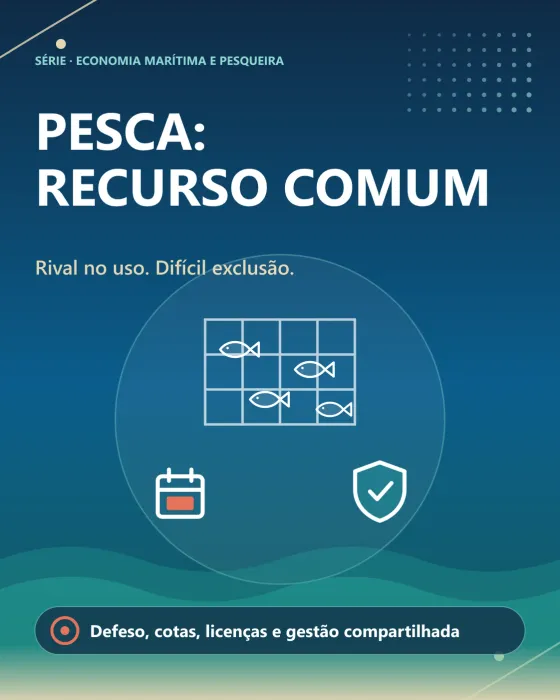
    Fisheries as a common-pool resource

    Rival in use. Hard to exclude.

    Fish stocks are the classic example of a common-pool resource: access is hard to prevent, but the fish caught by one are no longer available to the others. Without rules, every fisher has an incentive to increase effort, and the result can be overfishing and lost income.

    Read the full piece 2 min read

    • Fisheries Economics
    • Common-Pool Resources
    • Regulation
    • Closed Seasons
  8. Part 8

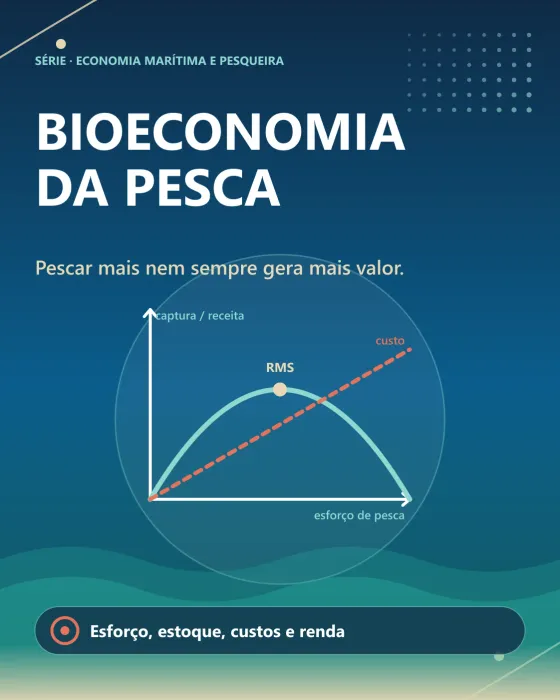
    Fisheries bioeconomics

    Fishing more does not always create more value.

    Fisheries bioeconomics integrates the biological dynamics of stocks with the economic behaviour of fishers. When effort grows too much, the stock falls and each trip catches less: more boats, hours and fuel do not guarantee more production or income.

    Read the full piece 2 min read

    • Fisheries Economics
    • Bioeconomics
    • Economic Models
    • Fisheries Management
  9. Part 9

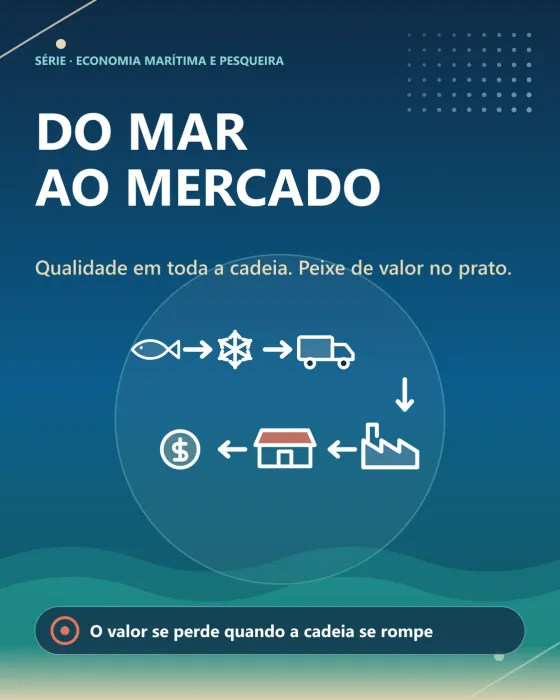
    From sea to market

    Quality along the whole chain. Valuable fish on the plate.

    The seafood value chain does not end at the catch. Value depends on integrating capture, landing, refrigeration, transport, processing, marketing and consumption, and breaks in the cold chain cause waste, loss of quality, lower prices for fishers and food-safety risks.

    Read the full piece 2 min read

    • Fisheries Economics
    • Value Chain
    • Logistics
    • Food Security
  10. Part 10

    Data for sustainable fisheries

    Technology, governance and local knowledge.

    Fisheries management depends on reliable information about stocks, catches, effort, location, the ocean, climate, prices and communities. Information systems can integrate landings, vessel tracking, remote sensing and local data, provided they are combined with governance, data protection and fishers' participation.

    Read the full piece 2 min read

    • Fisheries Economics
    • Information Systems
    • Data and Technology
    • Remote Sensing

All content